Introduction to CI/CD Automation
Continuous Integration (CI) and Continuous Deployment (CD) have become integral to modern software development practices. CI/CD automation enables software teams to streamline their development workflows by automating the build, test, and deployment stages of the software delivery pipeline. This level of automation allows organizations to deliver high-quality software faster and more reliably.
By incorporating CI/CD into DevOps practices, development teams can respond to customer needs quickly, improve collaboration across teams, and reduce manual intervention in repetitive tasks. The growing emphasis on CI/CD automation is transforming how software is developed, tested, and deployed, making it a vital component of modern DevOps toolchains.
This article will delve into how CI/CD automation is revolutionizing the development lifecycle, its core components, best practices, real-world use cases, and the key challenges organizations face in adopting CI/CD pipelines.
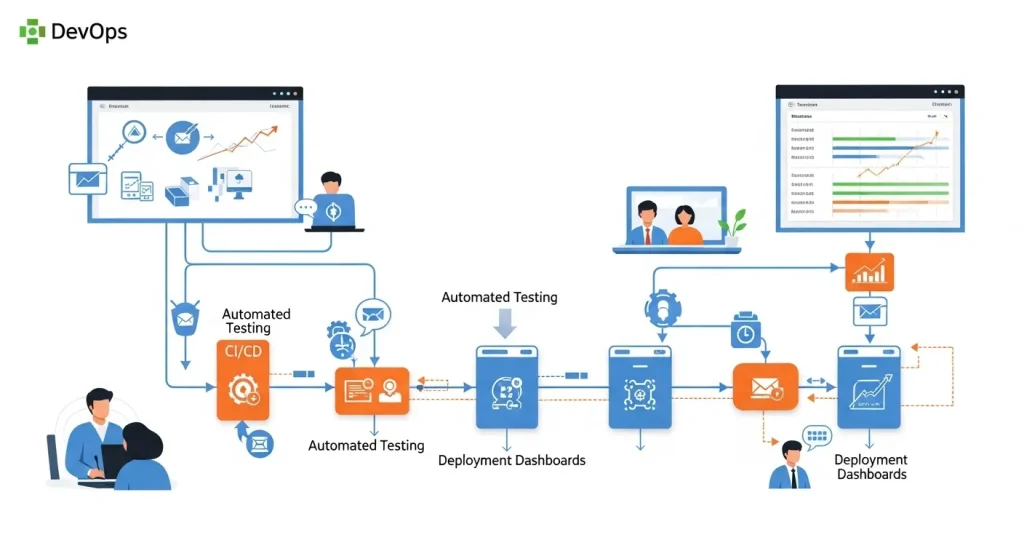
Understanding CI/CD Automation
At its core, CI/CD automation revolves around automating the repetitive tasks associated with building, testing, and deploying software. By leveraging tools and technologies designed to streamline these processes, teams can reduce errors, improve efficiency, and accelerate the delivery of software. Let’s take a closer look at the essential components of CI/CD automation.
1. Core Components of CI/CD Automation
The success of CI/CD automation hinges on several core elements that work together to ensure seamless software delivery:
- Automated Builds: The process of automatically compiling code, running unit tests, and creating executable files from source code. Automated builds help developers avoid manual intervention and ensure that the latest changes are consistently tested.
- Continuous Testing: Automated testing is crucial to ensure that code is functional, free of bugs, and performs as expected. By integrating testing into the CI/CD pipeline, teams can detect errors early, improving software quality.
- Automated Deployment: The process of deploying code changes to production environments automatically after passing all tests. This ensures faster and more reliable releases, reducing downtime and human error.
- Pipeline Management: A CI/CD pipeline manages the stages of the software delivery process, from code integration to production deployment. This allows teams to visualize and control the entire flow of changes across various environments.
- Quality Gates: Quality gates are checkpoints within the CI/CD pipeline that ensure code meets predefined quality standards before progressing to the next stage. They help maintain high code quality and prevent bugs from reaching production.
2. Benefits of CI/CD Automation
Implementing CI/CD automation brings several benefits to software development teams and organizations:
- Faster Delivery: Automated pipelines reduce the time taken to integrate code, test, and deploy it. This results in faster time-to-market for new features and bug fixes, enabling organizations to remain competitive.
- Improved Code Quality: Continuous integration and automated testing ensure that code is regularly validated. This reduces the risk of defects slipping through and improves the overall quality of the software.
- Reduced Errors: Automating the build, test, and deployment process minimizes the chances of human error. Automated checks ensure that only validated code is deployed, improving reliability.
- Better Collaboration: CI/CD fosters collaboration between development, testing, and operations teams by creating a unified, transparent workflow. Teams can communicate effectively, leading to improved productivity and fewer bottlenecks.
- Enhanced Reliability: Automated deployment pipelines reduce the risks associated with manual deployments, ensuring that code is deployed in a consistent and predictable manner. This leads to more stable production environments.
Implementation Strategies for CI/CD Automation
Successfully implementing CI/CD automation requires a well-defined strategy that aligns with the organization’s development goals. Below are key elements of a successful CI/CD implementation.
1. Pipeline Framework
A solid pipeline framework ensures that all stages of software delivery are automated and optimized for speed and quality:
- Build Automation: The first step in the pipeline is automating the build process. This includes compiling code, managing dependencies, and generating artifacts. Tools like Jenkins, CircleCI, and GitLab CI are commonly used to automate builds.
- Test Automation: Unit tests, integration tests, performance tests, and security tests should be automated and run with each code change. This ensures that potential issues are detected early. Tools like Selenium, JUnit, and TestNG are popular choices for automating tests.
- Deployment Automation: Automating deployment ensures that code changes can be pushed to production quickly and safely. Deployment tools like Kubernetes, Docker, and Terraform enable seamless automation of this process.
- Monitoring and Feedback Loops: Continuous monitoring of the CI/CD pipeline allows teams to detect and address issues quickly. Real-time feedback from the pipeline ensures that developers can act on failing tests or performance problems before they reach production.
2. Technology Integration
Integrating the right set of tools is crucial for creating an efficient CI/CD pipeline. Here are the core technologies typically used:
- Version Control Systems: Git and other version control systems are fundamental to CI/CD. They track changes to code and enable automated triggering of pipeline stages when code is committed.
- Build Tools: Tools like Maven, Gradle, and Ant automate the process of compiling and building code.
- Test Frameworks: Automated testing frameworks, including JUnit, TestNG, and Selenium, ensure that tests are executed at each stage of the pipeline.
- Deployment Tools: Continuous deployment requires tools like Docker, Kubernetes, Ansible, and Terraform to automate the deployment process across multiple environments.
- Monitoring Systems: Integrating monitoring systems, such as Prometheus and Grafana, ensures that performance and reliability issues are detected early, preventing potential downtime in production.
Technical Considerations in CI/CD Automation
CI/CD automation is not without its challenges, particularly when it comes to technical implementation. The following considerations are crucial:
1. Build Automation
Efficient build automation is critical for ensuring that code changes are compiled and packaged quickly. Teams must ensure that:
- Source Control Integration: Code must be regularly pushed to a version control system like Git, triggering automated build processes.
- Dependency Management: Managing dependencies between various components of the application is essential to avoid conflicts.
- Artifact Storage: Build artifacts must be stored and managed to avoid the risk of overwriting critical production versions.
2. Test Automation
Automated tests are essential to ensure that new code does not introduce bugs:
- Unit Testing: Automated unit tests check individual components of the application.
- Integration Testing: These tests verify that different components work together as expected.
- Performance and Security Testing: Ensuring that the application performs well under load and is secure from vulnerabilities is crucial for reliable releases.
3. Deployment Automation
Deployment automation simplifies the process of pushing code changes to production:
- Multi-Environment Support: The pipeline must be capable of supporting multiple environments, such as development, staging, and production.
- Rollback Capabilities: The pipeline should include rollback mechanisms in case an issue is detected after deployment.
Best Practices for CI/CD Automation
To achieve the best results from CI/CD automation, follow these best practices:
1. Pipeline Design
A well-designed CI/CD pipeline includes several stages that ensure smooth, efficient delivery:
- Modular Structure: Break down the pipeline into clear stages such as build, test, and deploy. This structure enables better troubleshooting and quicker feedback loops.
- Quality Checks: Integrate quality gates at every stage to ensure code meets high standards before progressing to the next step.
- Rollback Plans: In case of a failure in production, having an automated rollback plan ensures that code can be reverted to a stable state quickly.
2. Automation Strategy
Successful automation requires a thoughtful strategy:
- Tool Selection: Choose the right tools based on your team’s needs and your tech stack.
- Process Automation: Automate as many steps of the development cycle as possible to eliminate manual intervention.
- Quality Control: Maintain a focus on quality by incorporating testing at every stage of the pipeline.
- Team Training: Ensure your team is well-trained in using the tools and processes involved in CI/CD.
- Documentation: Keep comprehensive documentation to ensure that the entire team can understand and maintain the pipeline.
Use Cases of CI/CD Automation
CI/CD automation is widely used in various industries and applications. Some common use cases include:
1. Development Workflows
- Code Integration: Developers can integrate code regularly into a shared repository, ensuring that code remains in a deployable state.
- Automated Testing: Continuous testing ensures that any new code changes pass predefined tests before being integrated into the main branch.
- Deployment Automation: Automating deployments ensures that new code can be rolled out quickly and reliably.
2. Industry Solutions
CI/CD is used in a wide variety of industries, including:
- Software Development: Automating the software delivery lifecycle helps development teams release faster and more frequently.
- Web Applications: Web apps can benefit from continuous delivery pipelines that push updates quickly and reliably.
- Mobile Apps: Mobile development teams use CI/CD to automate testing and deployment, ensuring frequent updates and bug fixes.
- Cloud Services: Cloud infrastructure automation enables smooth, scalable deployments for cloud-based applications.
Implementation Challenges
While CI/CD automation offers many advantages, there are several challenges organizations may face during implementation:
1. Technical Challenges
- Tool Integration: Integrating multiple CI/CD tools can be complex, especially if legacy systems are involved.
- Environment Setup: Ensuring that the build and test environments closely match production environments can be challenging.
- Test Automation: Automating tests across various platforms and technologies may require additional configuration.
- Deployment Complexity: Managing multi-environment deployment pipelines can add complexity, especially for large teams or projects.
2. Operational Challenges
- Team Adoption: CI/CD requires changes to workflows, which may face resistance from team members who are accustomed to manual processes.
- Process Changes: Implementing CI/CD often necessitates changes to development workflows, which can be time-consuming and disruptive.
- **Resource Allocation
:** Setting up and maintaining a CI/CD pipeline requires investment in tools and infrastructure.
- Documentation: Proper documentation is essential for scaling and maintaining CI/CD processes across teams.
Case Studies of CI/CD Success
Several organizations have successfully implemented CI/CD automation to improve their software delivery processes:
- Enterprise Transformation: A major enterprise reduced software delivery time by 80% and improved code quality by 60% through automated testing and deployment.
- Web Application Success: A global e-commerce company adopted CI/CD and reduced downtime by 50%, allowing for faster feature releases and bug fixes.
Future Trends in CI/CD Automation
The future of CI/CD automation is exciting, with several trends poised to further enhance its effectiveness:
- AI and Machine Learning Integration: AI-powered CI/CD tools will improve automation by detecting issues faster and optimizing pipelines in real-time.
- Advanced Automation: More aspects of the software development lifecycle will be automated, including security checks, code reviews, and performance monitoring.
- Enhanced Monitoring: Real-time monitoring and intelligent feedback systems will further reduce downtime and increase reliability.
- Better Tools and Practices: The ongoing evolution of CI/CD tools will improve pipeline management, reporting, and analytics.
Conclusion
CI/CD automation is reshaping the software development landscape by accelerating delivery, improving quality, and enhancing collaboration between teams. However, to fully capitalize on its benefits, organizations must plan carefully, choose the right tools, and overcome the technical and operational challenges that come with adoption. By following best practices and leveraging the latest advancements in CI/CD automation, teams can stay ahead of the competition and deliver high-quality software faster than ever before.