Key Takeaways
- Event-driven architecture enhances scalability in serverless applications.
- Decoupled systems improve reliability and flexibility.
- Core patterns like event sourcing and pub/sub drive efficiency.
- Strategic implementation and best practices ensure success.
- Addressing challenges is critical for optimal performance.
Introduction to Event-Driven Serverless Architecture
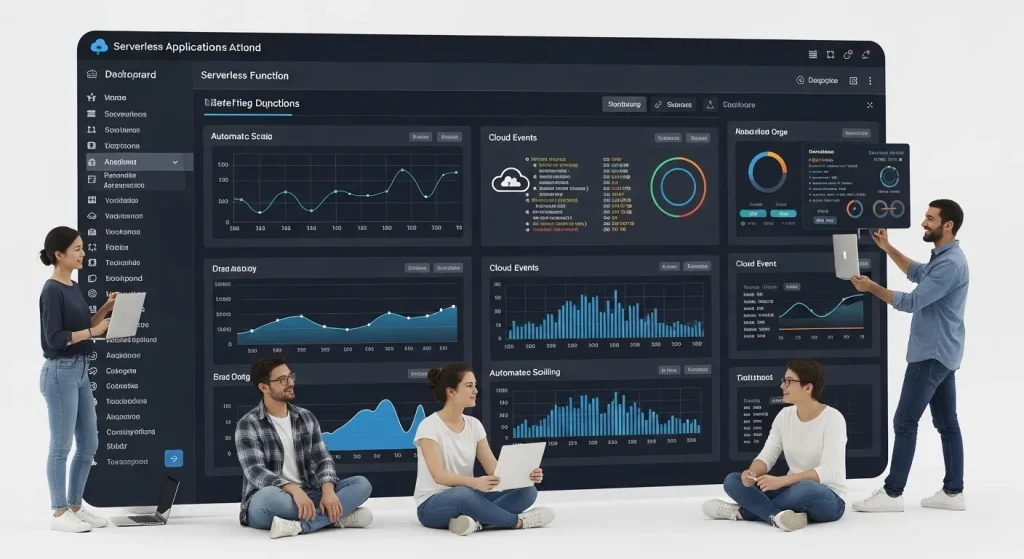
Event-driven architecture is a cornerstone of serverless computing, enabling organizations to build scalable, flexible, and resilient applications. By using events as the primary mechanism for communication, serverless systems can process tasks asynchronously, reducing dependencies and enhancing maintainability. This article explores key event-driven design patterns, their benefits, implementation strategies, and best practices for serverless architecture, providing a roadmap for organizations to leverage this approach effectively.
Understanding Event-Driven Patterns
Event-driven design patterns provide structured ways to handle asynchronous communication in serverless environments, ensuring efficient and scalable operations.
Core Event-Driven Patterns
Key patterns include:
- Event Sourcing: Captures all changes to an application’s state as a sequence of events, enabling auditability and state reconstruction.
- CQRS (Command Query Responsibility Segregation): Separates read and write operations to optimize performance and scalability.
- Pub/Sub (Publish/Subscribe): Allows services to publish events to multiple subscribers, enabling loose coupling.
- Event Streaming: Processes continuous data streams for real-time analytics and monitoring.
- Saga Pattern: Manages distributed transactions across microservices, ensuring consistency without tight coupling.
Benefits of Event-Driven Architecture
Adopting event-driven patterns offers significant advantages:
- Loose Coupling: Services operate independently, reducing dependencies and improving modularity.
- Scalability: Serverless platforms automatically scale to handle event-driven workloads.
- Resilience: Decoupled systems are less prone to cascading failures.
- Flexibility: Events allow dynamic integration of new services or features.
- Maintainability: Clear event flows simplify debugging and updates.
Implementation Strategies
Successful adoption of event-driven serverless architecture requires careful planning and execution.
Event Design
Effective event design is foundational:
- Event Structure: Define clear, consistent event schemas with relevant metadata (e.g., event type, timestamp, payload).
- Event Flow: Map event producers and consumers to ensure smooth data flow.
- Error Handling: Implement robust mechanisms to manage failures, such as retries or dead letter queues.
- State Management: Use event sourcing or external databases to track application state.
- Event Versioning: Plan for schema evolution to maintain compatibility as systems evolve.
Architecture Setup
Setting up a serverless event-driven system involves:
- Event Bus Configuration: Use tools like AWS EventBridge or Azure Event Grid to centralize event routing.
- Service Integration: Connect serverless functions (e.g., AWS Lambda, Google Cloud Functions) to event sources.
- Monitoring Setup: Implement tools like AWS CloudWatch or Datadog for real-time insights.
- Error Handling: Configure retries, timeouts, and dead letter queues for fault tolerance.
- Testing Strategy: Simulate events to validate system behavior under various conditions.
Technical Considerations
Technical aspects of event-driven serverless systems require careful attention to ensure performance and reliability.
Event Processing
Key considerations for processing events:
- Event Validation: Ensure events conform to expected schemas to prevent errors.
- Event Routing: Direct events to the correct consumers using rule-based routing.
- Error Handling: Implement retries and fallback mechanisms for transient failures.
- Retry Mechanisms: Configure exponential backoff to manage load spikes.
- Dead Letter Queues: Store unprocessed events for later analysis and debugging.
Integration Patterns
Integration approaches include:
- API Gateway: Use API Gateway to trigger serverless functions from HTTP events.
- Message Queues: Leverage queues (e.g., AWS SQS, RabbitMQ) for reliable event delivery.
- Event Streams: Process continuous data with tools like Apache Kafka or AWS Kinesis.
- Service Integration: Connect serverless functions to databases, storage, or third-party services.
- Data Storage: Use serverless databases like DynamoDB for state persistence.
Best Practices for Event-Driven Design
Adhering to best practices ensures optimal performance and maintainability.
Event Design Best Practices
- Clear Event Naming: Use descriptive, consistent names (e.g.,
OrderPlaced,PaymentProcessed). - Version Control: Maintain event schema versions to support backward compatibility.
- Schema Validation: Enforce schemas to prevent invalid events from entering the system.
- Documentation: Document event types, payloads, and flows for team clarity.
- Testing Strategy: Use unit tests and integration tests to validate event processing.
Performance Optimization
Optimization techniques include:
- Event Batching: Process events in batches to reduce function invocations and costs.
- Caching Strategies: Cache frequently accessed data to improve response times.
- Resource Allocation: Optimize memory and timeout settings for serverless functions.
- Monitoring: Track metrics like latency, error rates, and throughput.
- Error Handling: Use circuit breakers to prevent system overload during failures.
Use Cases for Event-Driven Serverless
Event-driven serverless architecture supports a wide range of applications.
Common Applications
- Real-Time Processing: Handle live data feeds, such as stock market updates or user activity logs.
- Data Synchronization: Keep distributed systems in sync, such as syncing user profiles across services.
- Workflow Automation: Automate business processes, like order fulfillment or customer onboarding.
- Notification Systems: Send real-time alerts via email, SMS, or push notifications.
- Analytics Processing: Process large datasets for insights, such as user behavior analysis.
Enterprise Solutions
- Microservices: Enable communication between decoupled microservices.
- Data Pipelines: Build scalable ETL (Extract, Transform, Load) pipelines.
- IoT Processing: Handle high-volume sensor data from IoT devices.
- Business Workflows: Orchestrate complex processes, like loan approvals.
- Integration Systems: Connect legacy systems with modern serverless applications.
Implementation Challenges
Adopting event-driven serverless architecture comes with challenges.
Technical Challenges
- Event Ordering: Ensuring events are processed in the correct order, especially in distributed systems.
- State Management: Maintaining consistent state across asynchronous processes.
- Error Handling: Managing failures in decoupled systems with minimal impact.
- Monitoring: Tracking events across distributed components.
- Testing Complexity: Simulating complex event flows for testing.
Operational Challenges
- Cost Management: Monitoring serverless costs to avoid unexpected expenses.
- Performance Monitoring: Ensuring low latency and high throughput.
- Security: Securing event data and access controls.
- Compliance: Meeting regulatory requirements for data handling.
- Team Training: Upskilling teams on serverless and event-driven paradigms.
Case Study: Real-Time Analytics Platform
A data analytics company implemented an event-driven serverless architecture, achieving:
- 50% Faster Processing: Reduced data processing times with event streaming.
- 40% Cost Reduction: Optimized resource usage with serverless scaling.
- Improved Scalability: Handled spikes in data volume effortlessly.
- Better Reliability: Ensured uptime with decoupled services.
- Enhanced Monitoring: Gained real-time insights into system performance.
Future Trends in Event-Driven Serverless
Emerging trends will shape the future of event-driven serverless architecture:
- AI/ML Integration: Combine event-driven systems with AI for predictive analytics.
- Advanced Monitoring: Leverage AI-driven observability for proactive issue detection.
- Enhanced Security: Implement zero-trust models for event-driven systems.
- Multi-Cloud Support: Enable seamless event routing across cloud providers.
- Edge Computing: Process events closer to data sources for lower latency.
FAQ
What are the main benefits of event-driven architecture?
It offers loose coupling, scalability, resilience, flexibility, and maintainability.
How can organizations implement event-driven patterns?
Focus on event design, architecture setup, integration patterns, and best practices.
What are the key challenges in event-driven implementation?
Challenges include event ordering, state management, error handling, and monitoring complexity.
Conclusion
Event-driven design patterns empower organizations to build scalable, resilient, and flexible serverless applications. By leveraging patterns like event sourcing, CQRS, and pub/sub, and adhering to best practices, businesses can optimize performance and maintainability. Addressing technical and operational challenges ensures successful adoption, paving the way for innovative solutions.
Next Steps
To adopt event-driven serverless architecture:
- Plan your event architecture and define clear event flows.
- Set up monitoring and error-handling mechanisms.
- Implement best practices for event design and optimization.
- Explore our Serverless Architecture section for further insights.