Introduction
In recent years, the concept of smart cities has emerged as a transformative force in urban planning. At the heart of this revolution is the Internet of Things (IoT), which is reshaping the way cities function. By connecting everyday objects, infrastructure, and services to the internet, IoT enables the creation of more efficient, sustainable, and livable urban environments. With the introduction of 5G technology, the potential of IoT to improve smart cities has reached new heights, offering faster connectivity, greater data processing power, and enhanced reliability.
In this article, we’ll explore how IoT is driving the evolution of smart cities, the benefits it offers, key implementation strategies, and real-world use cases, along with the challenges cities face in adopting these technologies.
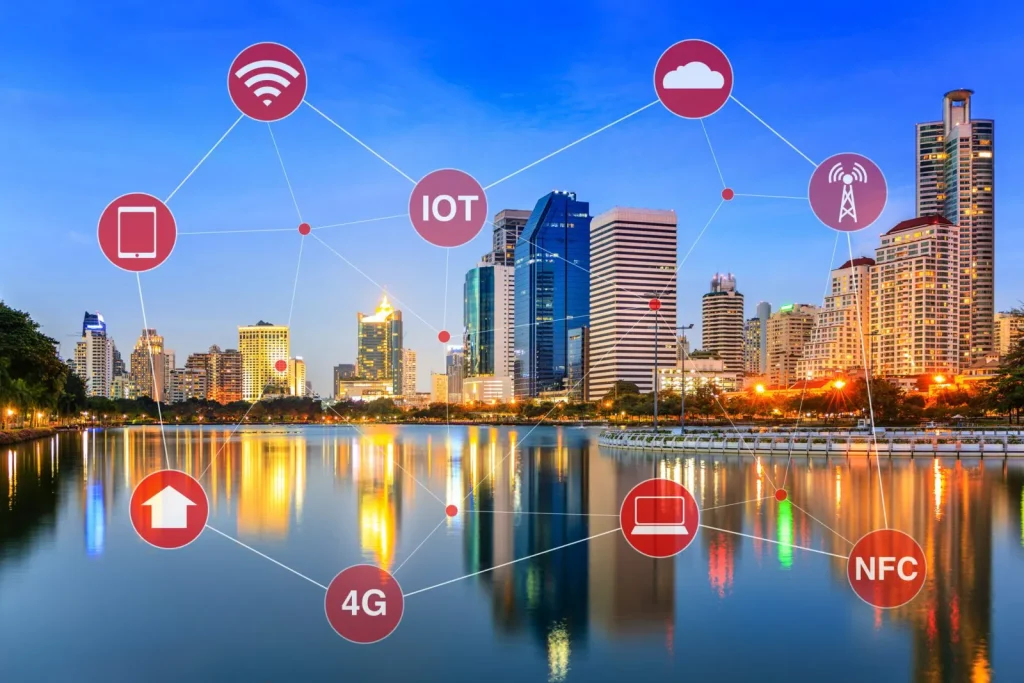
What Are Smart Cities?
A smart city integrates information and communication technologies (ICT) and IoT solutions into city infrastructure and services. This networked approach allows cities to operate more efficiently, ensuring better management of resources, improving public services, and increasing the overall quality of life for residents. The backbone of a smart city is IoT, which provides the real-time data and connectivity required for intelligent decision-making and automation.
The Core Components of Smart Cities
- Connected Infrastructure
Smart cities are built on a foundation of interconnected infrastructure. This includes everything from smart traffic lights and street lighting to sensors embedded in roads, buildings, and public spaces. These elements collect and transmit data to enable real-time analysis and optimization. - Sensor Networks
At the heart of a smart city’s IoT ecosystem are sensor networks that collect data on everything from air quality and traffic congestion to water usage and energy consumption. These sensors provide the raw data that is used to monitor and optimize city operations. - Data Analytics
Data collected from various sources is analyzed to derive actionable insights. This can include predictive maintenance, resource optimization, or identifying patterns that can improve urban services. Big data and machine learning are often employed to enhance these analyses. - Smart Services
IoT enables cities to offer services that are more personalized and responsive to the needs of citizens. Smart transportation systems, healthcare monitoring, and real-time energy usage tracking are just a few examples of how cities can enhance service delivery. - Citizen Engagement
Engaging citizens through digital platforms is crucial for the success of smart cities. Whether through mobile apps, social media, or direct feedback systems, involving residents in decision-making fosters a sense of ownership and increases the effectiveness of smart city initiatives.
Benefits of Smart Cities
The integration of IoT in cities offers numerous advantages:
- Improved Efficiency
Real-time data and automated systems help streamline city operations, from waste management and energy use to traffic control. This leads to reduced operational costs and better resource utilization. - Enhanced Sustainability
By optimizing energy use, reducing waste, and promoting green transportation, smart cities contribute to environmental sustainability. IoT solutions can enable cities to monitor and reduce their carbon footprint, making them more eco-friendly. - Better Resource Management
IoT-powered systems allow for more efficient management of resources like water, electricity, and waste. Smart grids and water management systems help ensure that resources are used wisely and waste is minimized. - Increased Safety
IoT-enabled technologies such as surveillance cameras, emergency response systems, and smart lighting contribute to enhanced public safety. Real-time data can help predict and prevent accidents, while law enforcement can use data to improve crime detection and response times. - Improved Quality of Life
By making cities more efficient and sustainable, smart cities enhance the overall quality of life for citizens. Whether it’s through better air quality, improved healthcare access, or more efficient transportation, residents benefit from a better living environment.
Implementing IoT in Smart Cities
To successfully deploy IoT in urban settings, cities must adopt comprehensive frameworks that include both technological and operational strategies.
- City Framework
A successful smart city framework requires careful planning in key areas:- Infrastructure Planning: This involves mapping out the physical and digital infrastructure needed to support IoT solutions.
- Technology Integration: Different IoT systems and technologies, including sensors, cloud computing, and data analytics platforms, must be integrated into existing city infrastructure.
- Service Delivery: Efficient service delivery mechanisms need to be established to ensure that IoT applications improve the lives of citizens.
- Citizen Engagement: Creating transparent communication channels with citizens is critical for ensuring broad public support and participation.
- Technology Integration
Integrating various technologies is a cornerstone of smart city development. Key elements include:- IoT Platforms: Platforms that provide the infrastructure to connect sensors, devices, and data analytics tools.
- 5G Networks: The introduction of 5G networks offers the bandwidth and low latency required for real-time data processing, enhancing IoT performance.
- Data Systems: Robust data storage and management systems are necessary for handling the large volumes of data generated by IoT devices.
- Security Measures: Protecting sensitive data and ensuring the cybersecurity of connected devices is essential for safeguarding both privacy and safety.
- User Interfaces: Providing intuitive interfaces for citizens and city administrators to interact with IoT systems is crucial for user adoption.
Key Technical Considerations
- IoT Infrastructure
The infrastructure supporting IoT in smart cities must be scalable and resilient. This includes sensor networks, connectivity solutions (such as fiber optics and 5G), and cloud-based data processing systems. These elements work together to ensure that data is collected, transmitted, and analyzed in real time. - 5G Integration
5G technology plays a pivotal role in the development of smart cities. It provides the high-speed, low-latency connectivity needed to support thousands or even millions of IoT devices. Cities must plan for 5G deployment, ensuring that coverage is comprehensive and reliable.
Best Practices for Smart City Implementation
- City Planning
A well-structured city planning process is crucial for the success of IoT initiatives. This involves setting a strategic vision, engaging stakeholders, and allocating resources efficiently. Cities must also define clear performance metrics to assess the success of smart city projects. - Technology Management
Managing the technology infrastructure is key to ensuring smooth operation. This includes system integration, data governance, and regular security updates. Cities should also plan for long-term maintenance and upgrades to accommodate future technological advancements.
Use Cases of Smart Cities
Smart cities have already seen success in various urban applications:
- Urban Services
- Traffic Management: IoT sensors and cameras help monitor traffic flow, reduce congestion, and optimize signal timings, improving overall traffic management.
- Energy Optimization: Smart grids and IoT sensors in energy systems enable cities to monitor usage patterns and optimize energy distribution, reducing waste and lowering costs.
- Waste Management: IoT-enabled waste bins and trash collection systems provide real-time data, ensuring timely pick-ups and more efficient waste management.
- Public Safety: Surveillance systems, emergency response tools, and smart street lighting contribute to safer urban environments.
- Citizen Services
- Smart Transportation: Public transport systems, including buses and trains, use IoT to provide real-time updates to passengers and optimize routes based on demand.
- Public Wi-Fi: Cities are increasingly offering free public Wi-Fi in parks, libraries, and other public spaces, enhancing connectivity for all residents.
- Emergency Response: IoT-enabled systems help dispatch emergency services more quickly and efficiently, improving response times.
- Healthcare Services: Remote health monitoring and telemedicine services offer increased access to healthcare, particularly in underserved communities.
Challenges of Smart City Implementation
- Technical Challenges
While IoT offers many opportunities, cities face several technical challenges in implementation:- Infrastructure Deployment: Building the necessary infrastructure can be expensive and time-consuming.
- Network Coverage: Ensuring comprehensive network coverage, particularly in densely populated or remote areas, can be challenging.
- Data Management: Managing the vast amounts of data generated by IoT devices requires sophisticated systems and analytics capabilities.
- Security and Privacy: Protecting sensitive data and ensuring that IoT devices are secure from cyber threats is a critical consideration.
- Operational Challenges
Beyond technical hurdles, cities also face operational challenges:- Cost Management: The initial investment required for smart city projects can be substantial, and managing costs over the long term is essential.
- Maintenance Requirements: IoT systems require continuous monitoring, maintenance, and updates to ensure they function effectively.
- Citizen Adoption: Encouraging residents to adopt new technologies and engage with smart city systems is vital for their success.
- Regulatory Compliance: Ensuring compliance with privacy laws and other regulations is a critical consideration for city governments.
Case Study: A Successful Smart City Transformation
A major city undertook an IoT-driven transformation, achieving impressive results:
- Energy Savings: By implementing smart grid systems and optimizing energy usage, the city reduced energy consumption by 40%.
- Traffic Reduction: IoT-powered traffic management systems resulted in a 30% reduction in traffic congestion.
- Improved Safety: Real-time surveillance and emergency response systems led to a marked improvement in public safety.
- Sustainability: The city’s efforts to optimize waste management and reduce carbon emissions contributed to its sustainability goals.
Future Trends in Smart Cities
The future of smart cities looks promising with emerging trends:
- Advanced Analytics: The integration of AI and machine learning will further enhance the ability to analyze vast amounts of data and make more accurate predictions.
- Enhanced Connectivity: 5G and future network technologies will support the growing number of IoT devices, enabling faster, more reliable connections.
- New Services: Innovations
in smart city services will continue to emerge, improving quality of life and expanding opportunities for citizens.
- Increased Citizen Engagement: Cities will continue to invest in platforms that allow citizens to actively participate in the development and management of their urban environments.
Conclusion
IoT technology is playing a pivotal role in transforming cities into more efficient, sustainable, and livable environments. As cities continue to embrace these technologies, they will improve services, enhance the quality of life for citizens, and create more resilient urban ecosystems. However, successful implementation requires strategic planning, stakeholder engagement, and overcoming technical and operational challenges. The future of smart cities is bright, with new technologies and solutions set to revolutionize urban living.